






















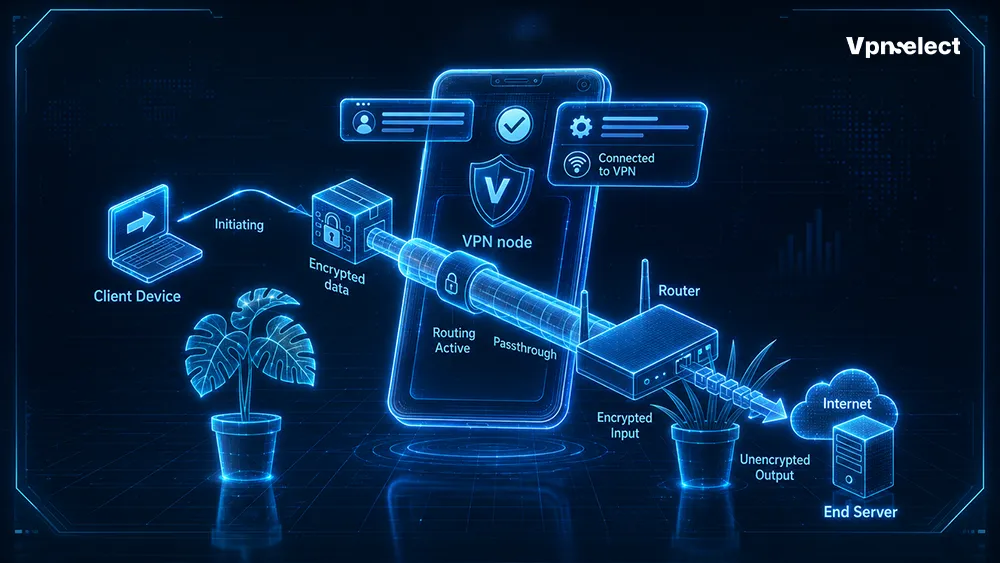







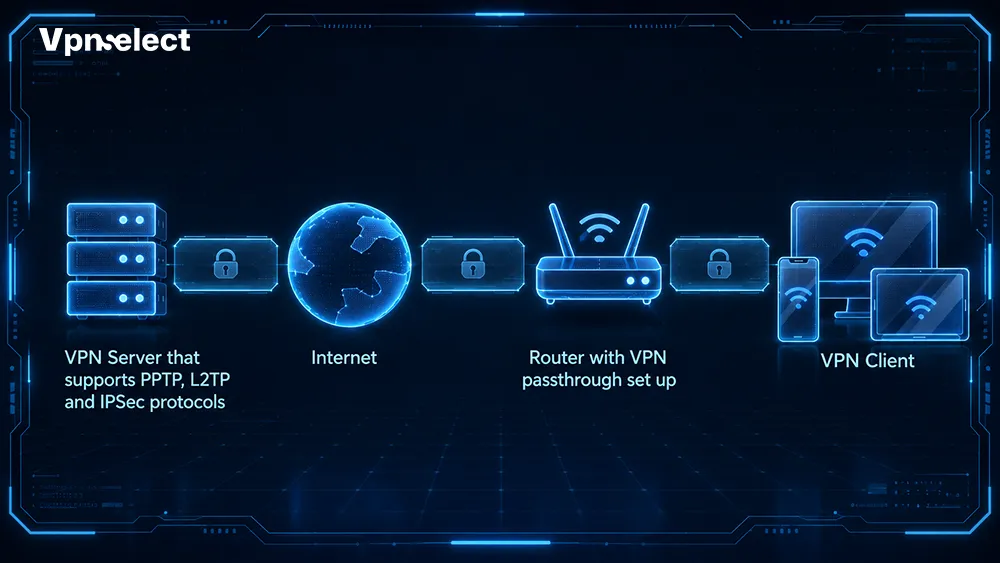
What is VPN passthrough? It is a built-in router feature that allows certain VPN traffic to pass through NAT and firewall systems without being blocked. While it does not create a VPN connection or provide encryption, it ensures compatibility between VPN clients and routers, opening a clear path for stable, hassle-free data transmission.
This feature is useful for both home users and businesses running older remote access connections. In this article, you will learn who needs VPN passthrough, how it works, and how enabling it can improve secure and reliable network access.
What Is VPN Passthrough?
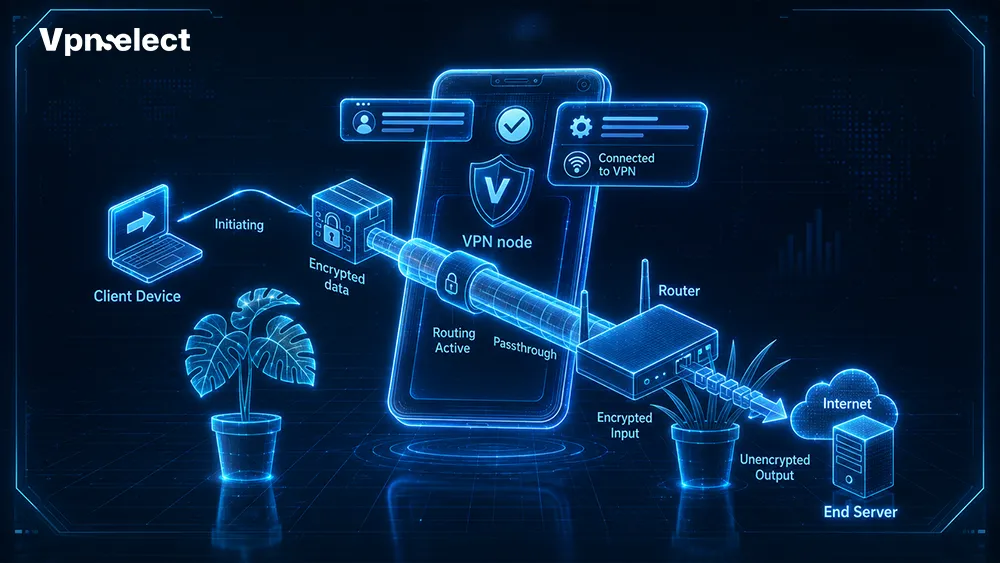
A VPN passthrough is a router feature that lets certain types of encrypted traffic pass through Network Address Translation (NAT) and firewall systems without being blocked. What is VPN passthrough? It does not create a VPN connection or provide encryption itself, but it ensures smooth compatibility between older VPN clients and your router hardware.
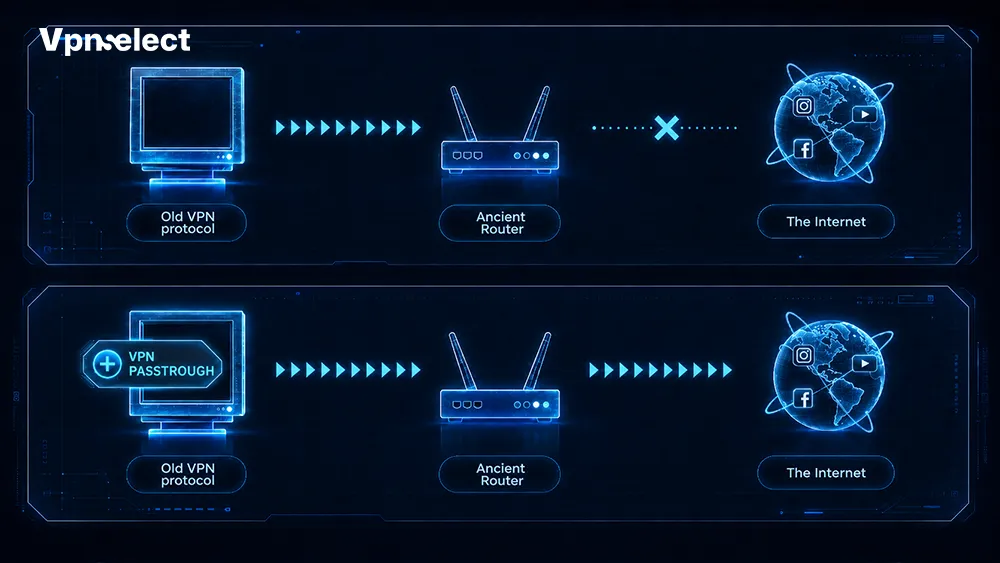
If this feature is not enabled, some VPN protocols may fail when trying to cross from your local network to the internet. Enabling passthrough ensures that both home and corporate devices can connect reliably to legacy servers and maintain uninterrupted communication.
How VPN Passthrough Works with NAT and Firewalls
To understand what is VPN passthrough, it helps to see how standard routers manage internet traffic. Routers use Network Address Translation (NAT) to share a single public IP address among all devices in a home or office. NAT relies on port numbers to send incoming data to the correct laptop, smartphone, or tablet.
Some older VPN protocols don’t use standard port markers, which can confuse NAT tables. When a remote worker tries to connect, strict firewall rules may block the packets. VPN passthrough solves this by recognizing protocol-specific headers and creating a dedicated path through the firewall, ensuring smooth and reliable connections. You can also see the answer to common questions about VPN traffic detection.
Types of VPN Passthrough Explained
This section breaks down what is VPN passthrough across different networking protocols. Understanding the differences helps you configure your router correctly and choose the right passthrough type for your home or business setup.
|
Passthrough Type |
Protocol | Security Level | Primary Use Case |
|
PPTP Passthrough |
PPTP | Very Low | Legacy Windows dial-up, old devices |
|
L2TP/IPSec Passthrough |
L2TP + IPsec | Moderate-High | Older enterprise VPNs, mobile devices |
| IPSec Passthrough | IPsec (UDP 500/4500) | High |
Site-to-site tunnels, hardware VPNs |
| SIP Passthrough | SIP (VoIP) | Moderate |
Video conferencing, VoIP phones |
| RTSP Passthrough | RTSP | Low-Moderate |
Streaming video, IP cameras |
The comparison table above illustrates that while VPN passthrough solves compatibility issues, the security of each protocol differs widely. You can also explore our intro to wireguard vpn protocol for modern alternatives that may not require passthrough.
PPTP Passthrough
This setting handles Point-to-Point Tunneling Protocol (PPTP) traffic using a secondary standard called Generic Routing Encapsulation (GRE). What is VPN passthrough for PPTP? It allows older VPN clients to pass through NAT and firewalls. While historically important as one of the first remote access helpers, PPTP uses weak encryption and is considered obsolete today. We strongly advise against using it for sensitive or professional activities because modern attacks can easily compromise it.
L2TP Passthrough
This option supports Layer 2 Tunneling Protocol (L2TP), typically combined with IPsec for encryption. Many legacy enterprise setups still rely on it to help remote employees connect with older corporate laptops. What is VPN passthrough for L2TP ensures the traffic is correctly routed while maintaining better security than PPTP, though it requires more processing power from the router.
IPsec Passthrough
IPsec passthrough allows routers to handle encrypted IPsec traffic using NAT Traversal (NAT-T). It remains highly relevant in business environments, connecting branch offices to headquarters. What is VPN passthrough for IPsec ensures that encrypted packets pass smoothly without dropping or disrupting active corporate sessions, supporting heavy encryption and secure remote access.
SSTP Passthrough
Secure Socket Tunneling Protocol (SSTP) passthrough allows HTTPS-based VPN traffic to traverse strict firewalls. This type is particularly useful for Windows environments where standard VPN ports may be blocked. What is VPN passthrough for SSTP ensures secure tunneling for users behind restrictive networks while maintaining reliable connectivity.
L2TP/IPSec over SSL Passthrough
Some older remote access systems combine L2TP/IPSec with SSL to create hybrid tunnels. This passthrough type helps routers recognize and forward these encapsulated packets correctly. What is VPN passthrough for these hybrid setups ensures secure, compatible communication with legacy servers and applications, preventing connection failures while supporting moderate encryption.
When Should You Enable or Disable VPN Passthrough?
VPN passthrough should be enabled when using older VPN protocols like PPTP or L2TP. If you are not using certain protocols, disabling passthrough can reduce security risks and minimize the network’s attack surface.
Enable It for Older VPN Protocols
You should enable this feature if your organization relies on older VPN protocols like PPTP, L2TP, or standard IPsec to connect to internal servers. Enabling the feature is quick and immediately removes routing barriers. Key points to consider:
- Supported Protocols: PPTP, L2TP, and standard IPsec.
- Purpose: Allows encrypted traffic to bypass NAT/firewall restrictions.
- Effect if Disabled: Connection attempts may fail or time out.
- Setup Time: Typically under one minute.
- Benefit: Ensures smooth, reliable remote access for legacy VPN clients.
Disable Unused Passthrough Options
For better security, disable any legacy passthrough settings that you or your organization do not actively use. Leaving them enabled unnecessarily increases your network’s attack surface, giving potential intruders more entry points. Closing unused protocols is a simple but important step in maintaining healthy digital hygiene.
Test Before and After Making Changes
Always test VPN functionality immediately after changing router settings. Record the behavior of your applications before and after adjustments to identify any issues. If your remote software works correctly without certain passthrough options, keep them disabled to maximize network security while maintaining functionality.
How to Enable VPN Passthrough on a Router
Activating this helper feature lets VPN traffic pass through your router without being blocked. What is VPN passthrough in this context? It is a setting that ensures encrypted traffic from older VPN protocols reaches its destination smoothly. While menu names differ between router brands, you can enable this option by following these steps:
Step 1. Log In to the Router Administration Panel:
- Open a web browser and enter your router’s local IP address (usually 192.168.1.1 or 192.168.0.1).
- Enter your administrative username and password to access the dashboard.
Step 2. Locate VPN Passthrough or Firewall Settings:
- Check under menus like Security, Firewall, or Advanced Settings.
- Look for a dedicated sub-menu labeled VPN Passthrough or ALG (Application Layer Gateway).
Step 3. Save Changes and Test the VPN Connection:
- Check the box for the specific protocol you need (e.g., IPsec or L2TP).
- Click Save or Apply and restart your router if prompted.
- Launch your VPN client and verify that the connection works without interruption.
Following these steps ensures your VPN traffic is routed correctly and helps maintain stable, secure remote access for both home and business users. For additional guidance, you can reference our double vpn guide and check our picks for recommended VPN services.
VPN Passthsssssrough Security Risks and Best Practices
While what is VPN passthrough is not malware, keeping it enabled for outdated protocols can create unnecessary vulnerabilities. Following best practices ensures your network remains protected and your VPN connections secure.
Avoid Using PPTP for Sensitive Activities
PPTP has deep structural weaknesses, making it unsafe for confidential data like company files or personal banking. Modern automated attacks can break its encryption quickly, so treat PPTP as a last-resort option for non-critical traffic only.
Keep Router Firmware Updated
Manufacturers regularly release updates that fix security flaws and improve performance. Running outdated firmware makes your router an easy target. Regularly check your administration panel to confirm your router is running the latest stable version.
Use Modern VPN Protocols Whenever Possible
Modern protocols like WireGuard and OpenVPN work smoothly through NAT and firewalls without needing special passthrough settings. They provide better speeds, lower battery usage on mobile devices, and stronger encryption compared to legacy protocols.
Enable Only the Passthrough Protocol You Actually Use
Activating all passthrough options increases the attack surface. If your office only uses IPsec, enable only IPsec passthrough and disable the rest. This minimizes unnecessary exposure while keeping essential VPN traffic flowing.
Monitor VPN Connections for Unusual Activity
Regularly review VPN logs for suspicious logins, unexpected traffic, or unauthorized access attempts. Early detection prevents minor issues from becoming serious breaches and ensures that what is VPN passthrough only serves authorized users.
Final Thoughts
Understanding what is VPN passthrough helps home users and businesses maintain reliable VPN connections. By enabling only the necessary protocols and keeping routers updated, you can balance compatibility, security, and performance for both personal and professional networks. Proper configuration ensures smooth remote access while minimizing potential vulnerabilities. You can also explore a detailed VPN guide for more advanced VPN concepts.
FAQs
Is VPN Passthrough the Same as a VPN?
No, VPN passthrough does not create a VPN or provide encryption; it simply allows VPN traffic to pass through NAT and firewalls.
Do I Need VPN Passthrough for WireGuard or OpenVPN?
Modern protocols like WireGuard and OpenVPN typically do not require passthrough because they are NAT-friendly.
What Happens If I Turn Off VPN Passthrough?
Older VPN protocols may fail to connect or experience disruptions, but modern VPN clients will generally work without them.
Is VPN Passthrough Safe?
Yes, when used correctly with up-to-date routers and modern VPNs. Avoid enabling unused protocols to reduce security risks.
Leave a comment