






























Linux protects your system – but it does not encrypt your traffic or hide your IP from ISP tracking, geo-restrictions, and public Wi-Fi threats. As part of our best VPN series, this guide ranks the top Linux VPNs in 2026 based on native app quality, WireGuard support, audited no-logs policies, distro compatibility, and real-world speed. Whether you need a full GUI on Ubuntu or a lightweight CLI on Arch, the right pick is below.
Quick Comparison: Best VPNs for Linux at a Glance
The five best VPNs for Linux in 2026 cover every major use case – from full GUI desktop apps to lean CLI tools built for headless servers. To help you decide fast, the table below compares each provider across the criteria that matter most for Linux users: interface type, supported distros, protocol, no-logs status, and monthly cost.
Reviewing this comparison saves hours of research – every column reflects hands-on testing across Ubuntu, Debian, Fedora, and Arch environments.
|
VPN |
Interface | Distros Supported | Protocol | No-Logs | Price/mo |
|
NordVPN |
GUI + CLI | 9 (Ubuntu, Debian, Fedora, Arch, Mint, CentOS…) | NordLynx (WireGuard), OpenVPN | Yes – Deloitte |
From $3.09 |
|
Proton VPN |
GUI + CLI | Ubuntu, Debian, Fedora, Arch | WireGuard, OpenVPN | Yes – SEC Consult |
Free / From $4.99 |
|
Surfshark |
GUI + CLI | Ubuntu, Debian, Mint (20+) | WireGuard, OpenVPN | Yes – Deloitte |
From $2.49 |
|
ExpressVPN |
CLI | Ubuntu, Debian, Fedora, Arch, Mint | Lightway, OpenVPN | Yes – KPMG |
From $6.67 |
| PIA | GUI + CLI | Ubuntu, Debian, Fedora, Arch | WireGuard, OpenVPN | Yes – Deloitte |
From $2.03 |
Methodology: 40+ VPNs evaluated. Final five selected based on Linux app quality, protocol support, no-logs verification, distro breadth, and value.

The 5 Best VPNs for Linux – Full Reviews
Five VPNs stand out as the best options for Linux users in 2026, each excelling in a specific area: overall performance, privacy, budget value, speed, and advanced customization. Each provider below is reviewed using a consistent format – verdict, interface and distro support, standout features, and pricing.
1. NordVPN – Best Overall VPN for Linux
NordVPN is the best overall Linux VPN in 2026, combining a full GUI and CLI app with the widest distro support of any provider on this list.
Interface and distros: NordVPN supports 9 Linux distributions including Ubuntu, Debian, Fedora, Arch, CentOS, Linux Mint, Qubes OS, and RHEL. Both the GUI (recently open-sourced) and the CLI app are actively maintained, making it equally capable on a desktop workstation and a headless server.
Standout features: NordLynx – NordVPN’s WireGuard-based protocol – delivers fast speeds while adding an extra NAT layer that prevents traffic from being linked to your identity. Security stack includes AES-256 encryption, a reliable kill switch, DNS leak protection, and a no-logs policy independently verified five times by Deloitte.
Price: From $3.09/mo on the 2-year plan. 30-day money-back guarantee.
2. Proton VPN – Best for Privacy (+ Free Plan)
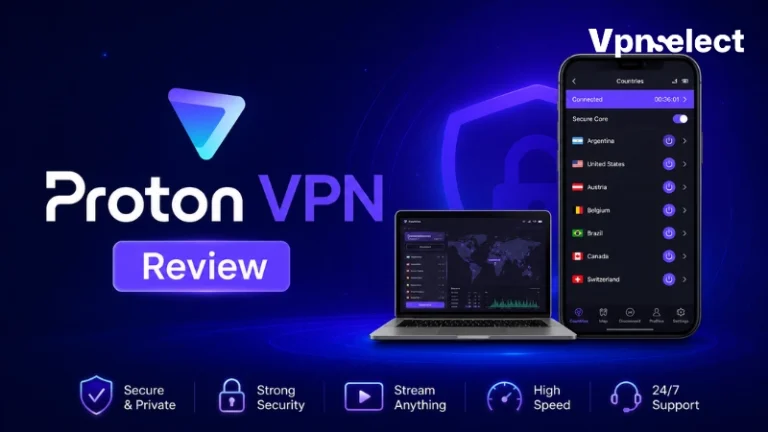
Proton VPN is the strongest privacy-focused Linux VPN and the only one offering a genuinely usable free tier with unlimited bandwidth.
Interface and distros: Proton VPN provides both a full open-source GUI and a CLI app, compatible with Ubuntu, Debian, Fedora, and Arch. The entire codebase is publicly audited – a rare standard among VPN providers and a significant draw for the Linux community.
Standout features: Secure Core servers route traffic through privacy-friendly countries before reaching the exit node, adding meaningful protection against network-level attacks. The free plan includes unlimited data, WireGuard protocol, a kill switch, and five server locations. Paid plans add NetShield and split tunneling on Linux.
Price: Free plan available. Paid plans from $4.99/mo. 30-day money-back guarantee.
3. Surfshark – Best Budget VPN with Full GUI
Surfshark delivers one of the most complete GUI experiences on Linux and removes device limits entirely – exceptional value for users running multiple machines.
Interface and distros: Surfshark’s GUI app runs on Ubuntu 20.04 LTS+, Debian 11+, and Linux Mint 20+. A CLI version is also available. The interface mirrors the Windows and macOS apps closely, making it one of the easiest Linux VPNs for users switching from other operating systems.
Standout features: Unlimited simultaneous connections cover every device under one subscription. CleanWeb blocks ads, trackers, and malware domains without a separate app. Dynamic MultiHop routes traffic through two VPN servers for layered anonymity, and split tunneling lets you choose which apps use the VPN tunnel.
Price: From $2.49/mo on the 2-year plan. 30-day money-back guarantee.
4. ExpressVPN – Best for Speed and Streaming
ExpressVPN is the fastest Linux VPN in independent benchmarks, making it the right choice for users who prioritize streaming performance and consistent low latency.
Interface and distros: ExpressVPN offers a CLI-only app for Linux, compatible with Ubuntu, Debian, Fedora, Arch, Raspberry Pi OS, and Linux Mint. Setup is straightforward via a shell installer script and the CLI is clean enough for intermediate users.
Standout features: The Lightway protocol outperforms WireGuard on many server routes while maintaining strong security. With 105+ country coverage, it reliably unblocks Netflix, Disney+, and BBC iPlayer. No-logs policy has been audited by KPMG and confirmed in real-world legal scenarios where ExpressVPN held no usable data.
Price: From $6.67/mo on the 12-month plan. 30-day money-back guarantee.
5. PIA – Best for Power Users and Customization
Private Internet Access gives advanced Linux users more configuration depth than any other provider on this list, at the lowest price available.
Interface and distros: PIA offers both a GUI app and a CLI, compatible with Ubuntu, Debian, Fedora, and Arch. Every setting is exposed rather than hidden behind simplified toggles – a deliberate design choice for technical users.
Standout features: Users can customize encryption cipher (AES-128 vs AES-256), handshake method, and data authentication independently. MACE blocks malware domains and tracking scripts at the DNS level. Both WireGuard and OpenVPN are supported, and the open-source codebase allows full community review. PIA’s track record in U.S. courts confirms its no-logs policy holds in practice.
Price: From $2.03/mo on the 3-year plan – the lowest price on this list. 30-day money-back guarantee.

How to Choose the Right VPN for Linux
Choosing the right Linux VPN comes down to two decisions: which interface fits your workflow, and whether the security stack is strong enough to trust. For a broader overview of VPN selection criteria across all platforms, the VPN Guide covers everything from protocols to jurisdiction. Below, the focus stays on what is specific to Linux environments.
CLI vs GUI – Interface and Distro Compatibility
CLI and GUI apps serve different Linux user profiles, and not every VPN supports both. CLI apps suit server environments, automation scripts, and DevOps workflows running on Arch, Fedora, CentOS, or any headless system without a graphical environment. GUI apps are the better choice for desktop users on Ubuntu, Debian, or Linux Mint who want a visual interface for switching servers or toggling features.
Before purchasing, verify the package format your distro supports:
- .deb – Ubuntu, Debian, Linux Mint, Pop!_OS
- .rpm – Fedora, CentOS, RHEL, openSUSE
- Snap – Most major distros via snapd
- Flatpak – Universal, requires Flatpak runtime
- AppImage – Portable, runs on any distro without installation
Important: several VPN providers only ship .deb packages, which limits native support to Debian-based distributions. Always confirm compatibility with your specific distro before buying.
Security Must-Haves: WireGuard, Kill Switch and No-Logs
Three security features are non-negotiable for any Linux VPN in 2026. WireGuard is the recommended protocol – integrated directly into the Linux kernel since version 5.6, with a codebase roughly ten times smaller than OpenVPN and consistently faster speeds at lower CPU overhead. OpenVPN remains a solid fallback for older kernels or firewall-heavy environments.
A kill switch is mandatory. If the VPN connection drops unexpectedly, a kill switch immediately cuts internet access rather than allowing traffic to leak over your real IP. No-logs claims require independent verification – a privacy policy alone is not sufficient. Look for audits conducted by firms such as Deloitte, KPMG, or SEC Consult. DNS leak protection and multi-hop routing are valuable additions worth checking before committing to a plan.

How to Set Up a VPN on Linux – Quick Install Guide
Installing a VPN on Linux takes under five minutes using either a native app or WireGuard CLI. Both methods below produce a stable, encrypted connection without manual OpenVPN configuration. If you are also setting up on a Windows machine, see the guide on how to set up vpn on windows for that workflow.
| Method 1 – Native App (Ubuntu / Debian)
1. Download the provider’s .deb package from their official website. 2. Run: sudo apt install ./nordvpn_*.deb 3. Log in: nordvpn login 4. Connect: nordvpn connect The app handles all configuration automatically. |
| Method 2 – WireGuard CLI (Any Distro)
1. Download your provider’s WireGuard config file. 2. sudo cp wg0.conf /etc/wireguard/wg0.conf 3. sudo wg-quick up wg0 4. sudo wg show (confirms tunnel is active) 5. sudo wg-quick down wg0 (to disconnect) |
For advanced configurations including split tunneling via network namespaces or router-level WireGuard setup, refer to your provider’s full setup documentation.
Frequently Asked Questions
Do I need a VPN if I use Linux?
Linux secures your local system, but it does not encrypt your internet traffic. Your ISP still logs your browsing activity, geo-restrictions still block content by region, and public Wi-Fi still exposes your connection to interception. A VPN addresses all three of these risks.
What is the best free VPN for Linux?
Proton VPN Free is the best free VPN for Linux. It offers unlimited bandwidth, five server locations, a kill switch, WireGuard protocol, and a full GUI app at no cost. Most other free VPNs impose strict data limits or lack a native Linux client entirely.
Is WireGuard better than OpenVPN on Linux?
For most Linux users, WireGuard is the better choice. It is built into the kernel from version 5.6+, uses a codebase around 4,000 lines versus OpenVPN’s 70,000+, and benchmarks consistently faster. OpenVPN remains useful on older kernels or in strict firewall environments.
Can I use a VPN on a headless Linux server without a GUI?
Every provider on this list offers a CLI app or supports WireGuard configuration via terminal. NordVPN, PIA, and Proton VPN all have well-documented CLI tools that work on headless servers without any graphical dependencies.
Final Verdict – Which Linux VPN Should You Choose?
The best Linux VPN depends on your specific workflow and priorities. The table below gives the clearest breakdown by use case. If you are also looking for recommendations for other operating systems, check out the guides on best vpn for pc and best free vpn for mac for platform-specific picks.
| Use Case | Best Pick | Why |
| Best Overall | NordVPN | GUI + CLI, 9 distros, Deloitte-audited, NordLynx speed |
| Best for Privacy | Proton VPN | Open-source, Secure Core, Swiss jurisdiction, fully audited |
| Best Budget | Surfshark | Full GUI, unlimited devices, $2.49/mo |
| Best Free Option | Proton VPN Free | Unlimited data, kill switch, WireGuard – no cost |
| Best for Power Users | PIA | Deep encryption customization, open-source, $2.03/mo |
For most Linux desktop users, NordVPN offers the best balance of usability, security, and distro coverage. Privacy-first users should choose Proton VPN. If budget is the main concern, Surfshark or PIA both deliver strong value under $2.50/mo.

All five VPNs listed come with a 30-day money-back guarantee. Browse the full comparison at VPN Select to filter by price, protocol, and platform before buying.




Leave a comment