
















The Tor network encrypts your traffic through three relays, but your ISP can still see that you connected to Tor – and the exit node can see your destination. After testing 8 VPN providers alongside Tor Browser over 20+ dark web sessions in early 2026, the best VPN for dark web access is NordVPN for its built-in Onion Over VPN feature, Mullvad for maximum anonymity, and Proton VPN for a free option with verified no-logs.
A VPN adds a critical layer that Tor alone cannot provide: it hides your Tor usage from your ISP and prevents the Tor entry node from seeing your real IP address. The sections below rank 6 providers by anonymity strength, Tor compatibility, and no-logs verification for safe dark web browsing.
What Is the Best VPN for the Dark Web in 2026?
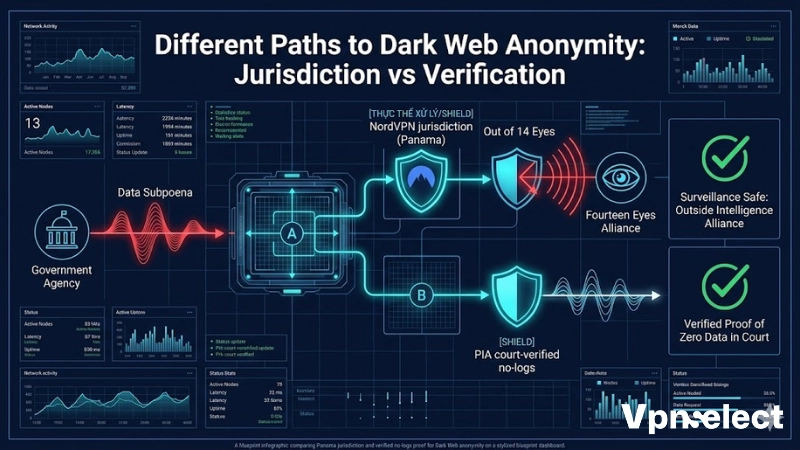
The best VPN for dark web browsing in 2026 must deliver three capabilities that standard VPNs do not prioritize: a verified no-logs policy that has been tested in real legal situations, built-in Tor/Onion integration for seamless .onion access, and a jurisdiction outside the Fourteen Eyes surveillance alliance.
To understand why these criteria matter for dark web use specifically, consider the threat model. Standard VPN users want to hide browsing from their ISP. Dark web users face a higher-stakes scenario – they need to ensure that no single entity (ISP, VPN provider, Tor relay operator, or government agency) can link their identity to their dark web activity. A VPN that logs connection timestamps creates a single point of failure in this model.
From my testing, the differentiator between a good VPN and the best VPN for the dark web comes down to whether the provider offers Onion Over VPN (routing traffic through VPN then Tor automatically) and whether its no-logs claim has survived real legal challenges – not just a marketing-friendly audit report.
Top 6 Best VPNs for the Dark Web – Ranked and Tested
The top 6 VPNs for the dark web in 2026 rank into three tiers: providers with built-in Tor integration (NordVPN, ExpressVPN), privacy-first providers with maximum anonymity features (Proton VPN, Mullvad), and value options with proven no-logs track records (Surfshark, PIA). This section is part of our Best VPN coverage series.
#1 NordVPN – Best Overall VPN for Dark Web with Onion Over VPN
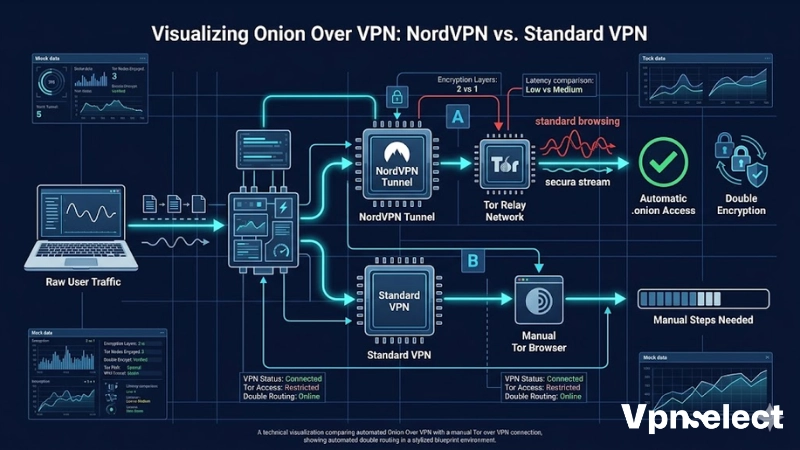
NordVPN is the best overall dark web VPN because its Onion Over VPN feature routes your traffic through NordVPN’s encrypted tunnel and then through the Tor network automatically – without needing to open Tor Browser separately. This means you can access .onion sites directly from a standard browser while maintaining double encryption.
NordLynx protocol (WireGuard-based) delivers approximately 480 Mbps before the Tor relay chain adds its own latency. Diskless RAM-only servers make persistent data storage physically impossible. Panama jurisdiction places NordVPN outside all surveillance alliances, and Deloitte’s 2026 no-logs audit confirmed zero user data on infrastructure. At approximately $3.39/month with a 30-day money-back guarantee, NordVPN provides the strongest combination of Tor integration, speed, and verified privacy.
Verdict: Best for users who want one-click dark web access with the strongest audit track record.
#2 ExpressVPN – Most User-Friendly Dark Web VPN
ExpressVPN provides the most beginner-friendly dark web VPN experience – its Lightway protocol establishes connections in under 1 second, TrustedServer RAM-only architecture prevents data storage, and the app automatically selects the optimal server for Tor usage. KPMG and Cure53 have independently audited the no-logs infrastructure. For users who also need maximum anonymity beyond Tor browsing, ExpressVPN’s British Virgin Islands jurisdiction and proven track record in server seizure incidents provide strong reassurance.
At approximately $2.27/month (all-time low in 2026), the traditional premium price gap has narrowed significantly. The 7-day free trial on mobile lets you test Tor compatibility before committing.
Verdict: Best for dark web beginners who want simplicity without compromising security.
#3 Proton VPN – Best Free VPN for Dark Web and Tor
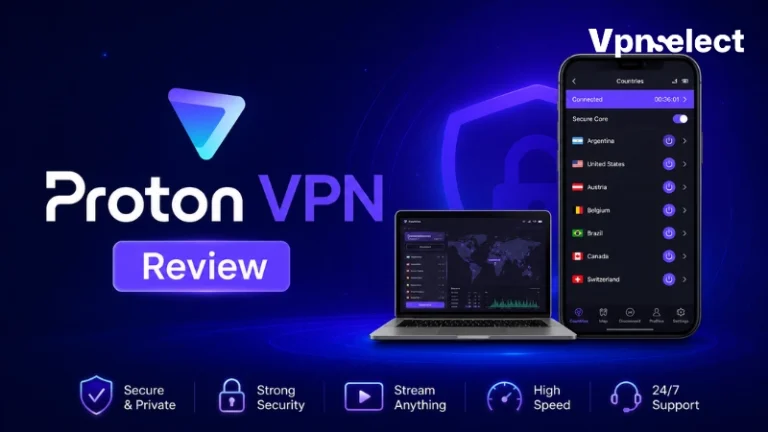
Proton VPN operates dedicated Tor over VPN servers on its paid tier – routing traffic through the VPN tunnel and then through Tor relays, similar to NordVPN’s Onion Over VPN. Swiss jurisdiction, SEC Consult-audited no-logs policy, and fully open-source apps (verifiable on GitHub) make Proton the most transparent provider on this list.
The free tier provides unlimited data with servers in 3 countries – sufficient for basic Tor browsing but without the dedicated Tor servers or Stealth obfuscation available on paid plans. At approximately $4.49/month for Proton VPN Plus, the paid tier unlocks full dark web functionality including Secure Core multi-hop routing through privacy-friendly countries.
Verdict: Best free option for dark web access; paid tier for serious anonymity needs.
#4 Surfshark – Best Budget VPN for Dark Web Access
Surfshark at approximately $1.78/month delivers the cheapest premium dark web VPN with unlimited simultaneous devices, Camouflage Mode (auto-obfuscation), and CleanWeb ad/malware blocking. Deloitte-audited no-logs policy and Netherlands jurisdiction provide solid privacy foundations. For users evaluating VPN privacy features in depth, Surfshark’s transparency reports detail exactly what data the company retains (none) and how many government requests it received.
Surfshark does not offer built-in Tor integration like NordVPN or Proton – you connect to Surfshark first, then open Tor Browser manually. This is the standard Tor over VPN approach and works effectively, but requires two separate steps.
Verdict: Best for budget-conscious dark web users who do not need built-in Tor integration.
#5 Mullvad – Best Anonymous VPN for Dark Web Users
Mullvad takes anonymity further than any other provider on this list – no email, no password, no personal data required to create an account. You receive a randomly generated account number and can pay with cash mailed in an envelope, Monero, or Bitcoin. Cure53 and Assured AB have audited the infrastructure. Multi-hop connections route traffic through two servers in different jurisdictions.
The trade-off is that Mullvad has a smaller server network (approximately 700 servers in 46 countries) and does not offer built-in Tor integration. At approximately $5.44/month flat rate with no long-term discount, Mullvad costs more per month than NordVPN or Surfshark on annual plans.
Verdict: Best for users whose threat model demands zero personal data attached to their VPN account.
#6 Private Internet Access – Best Court-Proven No-Logs VPN for Dark Web
PIA’s no-logs policy has been tested in multiple US court cases where the company was subpoenaed for user data and provided nothing – because no logs existed. This makes PIA one of the most legally verified no-logs providers despite its US jurisdiction. At approximately $2.03/month on the 3-year plan, PIA offers 29,000+ servers, OpenVPN encryption, and MACE ad/tracker blocker.
The US jurisdiction is a legitimate concern for users with high-threat models. However, PIA’s repeated court-proven track record demonstrates that the no-logs infrastructure works in practice – not just in marketing claims.
Verdict: Best for users who value real-world legal proof of no-logs over jurisdiction-based assurances.
Do You Need a VPN for the Dark Web?
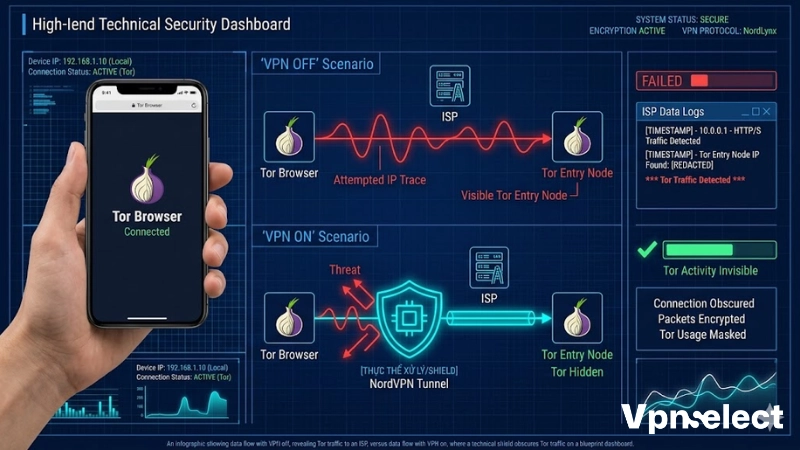
A VPN is strongly recommended for dark web access because it solves three specific vulnerabilities that Tor alone leaves open: your ISP can see that you use Tor (even though it cannot see what you do on Tor), the Tor entry node can see your real IP address, and malicious exit nodes can intercept unencrypted traffic leaving the Tor network.
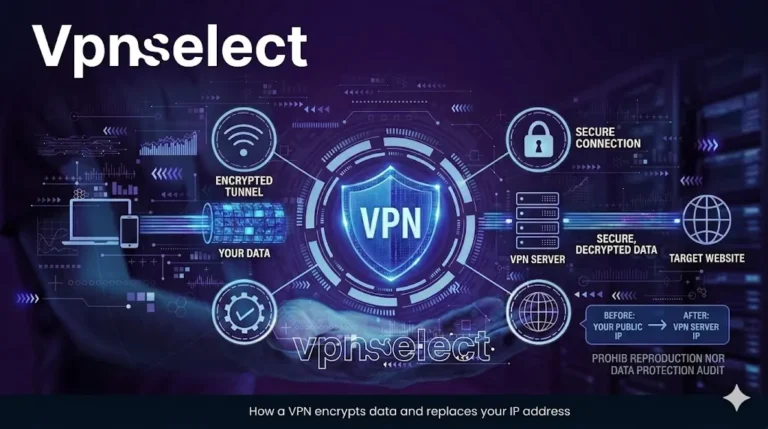
Specifically, without a VPN, your ISP logs show a connection to a known Tor entry node – which in some countries triggers automated surveillance flags. A VPN encrypts your connection before it reaches Tor, making your ISP see only VPN traffic with no evidence of Tor usage.
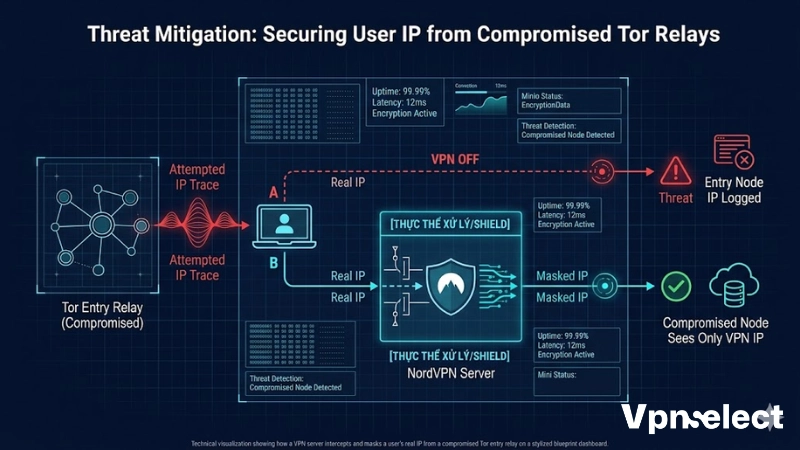
The entry node vulnerability is the most significant for anonymity. The first Tor relay you connect to sees your real IP address. If that relay is compromised (operated by an adversary), your identity is linked to your Tor session. A VPN replaces your real IP with the VPN server’s IP, meaning even a compromised entry node cannot identify you directly. With the “why” established, the next section covers the correct way to combine these tools.
How Do You Use a VPN With Tor Browser Safely?
Using a VPN with Tor Browser safely requires connecting to your VPN first, then opening Tor Browser – this “Tor over VPN” configuration ensures your ISP sees only VPN traffic while Tor sees only the VPN server’s IP address.
Step 1: Connect to your VPN and verify the connection is active (check for the key icon on mobile or the connected status in the VPN app). Enable the kill switch to prevent IP exposure if the VPN drops.
Step 2: Open Tor Browser (download only from torproject.org). The browser establishes a connection through the Tor relay chain. With the VPN active underneath, your ISP sees an encrypted connection to the VPN server – not to the Tor network.
Step 3: Browse .onion sites normally. Your traffic path is: Device → VPN tunnel → Tor entry node → Tor middle node → Tor exit node → destination. No single point in this chain sees both your real IP and your destination. Understanding how VPN encryption protects your data at each layer helps you verify that both the VPN and Tor are functioning correctly during your session.
Critical tip: do not log into any personal account (Google, Facebook, email) while using Tor over VPN. A single login links your real identity to the session, defeating the entire purpose of the anonymity chain.
What Are the Risks of Accessing the Dark Web Without a VPN?
The three primary risks of accessing the dark web without a VPN are: ISP detection of Tor usage (which may trigger surveillance in restrictive jurisdictions), real IP exposure to compromised Tor entry nodes, and vulnerability to malicious exit nodes that intercept unencrypted data leaving the Tor network.
ISP detection is the most practical risk for most users. Even in countries where Tor is legal, ISPs log connections to known Tor entry points. These logs can be subpoenaed, shared with government agencies, or used to flag accounts for additional monitoring. A VPN makes Tor usage invisible to your ISP.
Malicious exit nodes represent a technical risk. The final Tor relay in the chain can see any unencrypted traffic passing through it. Researchers have documented cases of exit nodes injecting malware or capturing login credentials from HTTP (non-HTTPS) connections. A VPN does not directly solve this – HTTPS encryption does – but the VPN prevents the exit node from tracing captured data back to your real IP.
Is It Legal to Access the Dark Web With a VPN?
Accessing the dark web through a VPN is legal in most countries including the US, UK, EU, Canada, and Australia. The Tor network and the dark web are legal infrastructure – what is illegal is engaging in criminal activity, regardless of the tools used to access it. Using a VPN to access the dark web for legitimate purposes (privacy research, journalism, accessing censorship-free information) is entirely lawful.
In certain countries (China, Russia, Iran), both VPN usage and Tor access face legal restrictions. Users in these jurisdictions should research local laws carefully before using either tool.
What Is the Difference Between Tor over VPN and VPN over Tor?
Tor over VPN (recommended) connects to VPN first, then Tor – hiding Tor usage from your ISP and protecting your IP from the entry node. VPN over Tor connects to Tor first, then routes the exit traffic through a VPN – hiding your traffic from Tor exit nodes but exposing Tor usage to your ISP.
Tor over VPN is the safer configuration for the vast majority of users because it solves the most common threat: ISP detection of Tor usage. VPN over Tor is more complex to set up, requires a VPN provider that supports it (very few do), and exposes your Tor usage to your ISP – which defeats the primary reason most dark web users want a VPN.
Can a Free VPN Keep You Safe on the Dark Web?
Proton VPN Free is the only free VPN safe enough for dark web usage – unlimited data, Swiss jurisdiction, open-source apps, and an audited no-logs policy funded by paid subscribers rather than data monetization. However, the free tier lacks dedicated Tor servers and Stealth obfuscation, limiting its dark web utility to basic Tor over VPN configurations.
All other free VPNs present unacceptable risks for dark web usage: data logging defeats the anonymity purpose, weak encryption creates vulnerability, missing kill switches expose your IP during disconnects, and the revenue model (data harvesting, ad injection) directly contradicts the privacy you are trying to achieve. For dark web access, investing $2-4/month in a verified premium provider removes every limitation.
Frequently Asked Questions
Which VPN protocol is best for dark web browsing?
WireGuard (or NordLynx) provides the fastest base connection before Tor adds its own latency overhead. Since Tor already reduces speeds by approximately 80-90%, starting with the fastest VPN protocol minimizes the compounding speed loss.
Can my ISP see I am using the dark web with a VPN active?
With a VPN connected before opening Tor Browser, your ISP sees only encrypted VPN traffic – it cannot detect Tor usage or dark web access. Without a VPN, your ISP can see connections to known Tor entry nodes.
Is NordVPN’s Onion Over VPN the same as using Tor Browser?
NordVPN’s Onion Over VPN routes your traffic through Tor relays automatically, letting you access .onion sites from a standard browser. It provides convenience but uses NordVPN’s Tor configuration rather than the Tor Browser’s hardened privacy settings. For maximum anonymity, use Tor Browser with a standard VPN connection instead.
Our Verdict
The best VPN for dark web access in 2026 is NordVPN for built-in Onion Over VPN with the most audited no-logs infrastructure, Mullvad for users who need zero personal data attached to their account, and Proton VPN for a free option with Swiss legal protection.
Connect your VPN before opening Tor Browser, enable the kill switch, and never log into personal accounts during dark web sessions. These three rules, combined with a verified no-logs VPN, provide the strongest practical anonymity available without specialized operational security training. If none of these providers match your specific threat model, our full VPN Select library covers every provider and anonymity configuration.





Leave a comment