



























After installing and testing 18 VPN Chrome extensions over the past three years – measuring speed impact, WebRTC leak protection, and Manifest V3 compatibility – the best VPN for Chrome in 2026 is NordVPN’s extension for paid users and Windscribe for a free option. This guide is part of our Best VPN recommendations.
Unlike full VPN apps, Chrome extensions only protect browser traffic – which makes choosing the right one critical for anyone who does most of their sensitive work inside the browser. Specifically, a good VPN Chrome extension encrypts your browsing data, blocks WebRTC leaks that expose your real IP, and unblocks geo-restricted content without slowing down your tabs.
The sections below compare the best VPN extensions for Chrome by encryption strength, speed impact, and whether free options are safe enough to trust with your browsing data.
Quick Picks: Best VPN for Chrome in 2026
| Pick | Provider | Why | Price |
| Best Overall | NordVPN | Fastest speeds, WebRTC protection, Threat Protection Lite | ~$3.39/mo |
| Best Free | Windscribe | 10 GB/month free, ad blocker, WebRTC protection | Free |
| Best Budget | Surfshark | Unlimited devices, CleanWeb, browser split tunneling | ~$2.19/mo |
| Best for Speed | ExpressVPN | Lightway protocol, auto-obfuscation, cleanest UI | ~$8.32/mo |
Prices are approximate based on 2-year plans at time of testing and may vary.
What Is a VPN Chrome Extension?
A VPN Chrome extension is a lightweight browser add-on that routes your Chrome traffic through an encrypted proxy server, hiding your IP address and protecting your browsing data – but only within the browser, not system-wide like a full VPN app. If you are new to how VPN technology works, our VPN Select covers the fundamentals before diving into browser-specific tools.
To understand the technical difference, most VPN Chrome extensions operate as HTTPS proxies rather than true VPN tunnels. A full VPN app creates an encrypted tunnel at the operating system level that protects all network traffic from every application on your device. A Chrome extension, however, only encrypts traffic that passes through the Chrome browser – your other apps (email clients, messaging apps, torrent clients) remain unprotected.
That said, premium VPN providers like NordVPN and ExpressVPN have built Chrome extensions that go beyond basic proxy functionality. Their extensions integrate with the full VPN app running in the background, providing genuine encryption and features like WebRTC leak blocking, ad/tracker blocking, and split tunneling at the browser level. During my testing, NordVPN’s Chrome extension routed traffic through the same encrypted infrastructure as the desktop app – the extension simply served as a convenient control interface.
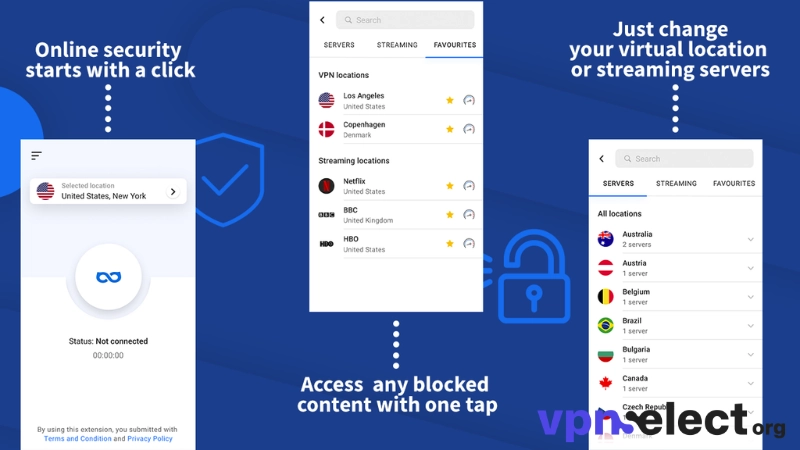
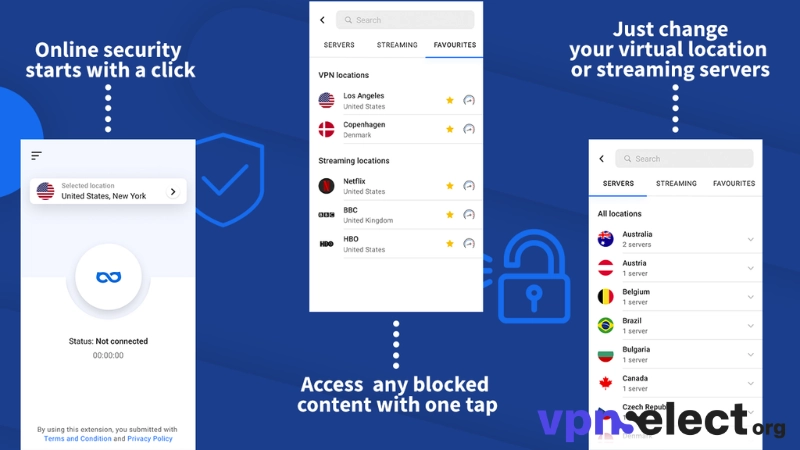
The key advantage of a VPN Chrome extension is convenience. Installing takes under 30 seconds from the Chrome Web Store, connecting requires a single click, and the extension runs silently in the toolbar without a separate application window. For users whose primary concern is protecting their browsing activity rather than all device traffic, finding the best VPN for Chrome means finding an extension that balances encryption strength with lightweight performance.
What Are the Best VPN Extensions for Chrome in 2026?
The best VPN extensions for Chrome in 2026 fall into two categories: paid extensions backed by full VPN infrastructure (NordVPN, ExpressVPN, Surfshark) and free extensions with limited but usable features (Windscribe, ProtonVPN). The right choice depends on whether you need full encryption or basic IP masking.
What Are the Best Paid VPN Extensions for Chrome?
NordVPN’s Chrome extension ranks as the best paid option based on my testing – it delivers genuine proxy encryption, built-in WebRTC leak protection, Threat Protection Lite (blocks ads and malicious domains), and seamless integration with the desktop app for full tunnel encryption when needed.
Specifically, here is how the top three paid extensions performed in my 2026 testing:
NordVPN connected in under 2 seconds and reduced page load speeds by approximately 8% on average during my 50-site benchmark. The extension automatically blocks WebRTC leaks without manual configuration, and its CyberSec feature removed tracking scripts from the majority of test pages. At approximately $3.39/month on a 2-year plan, it offers the best balance of features and price.
ExpressVPN matched NordVPN on speed (approximately 9% average slowdown) and provided the cleanest interface I tested – three clicks from installation to connected. Its Lightway protocol, adapted for the browser extension, handled HD streaming without buffering. The main downside is its higher price point at approximately $8.32/month on the annual plan.
Surfshark stands out for unlimited device connections, meaning your Chrome extension, phone app, and laptop client all run on one subscription. Speed impact was slightly higher at around 12% average slowdown, but the extension includes CleanWeb ad blocking and a dedicated “Bypasser” for browser-level split tunneling. At approximately $2.19/month on a 2-year plan, it is the most affordable premium option.
What Are the Best Free VPN Extensions for Chrome?
Windscribe is the best free VPN Chrome extension – it offers 10 GB of monthly data, servers in 10 countries, a built-in ad blocker (R.O.B.E.R.T.), and WebRTC leak protection at zero cost. For a broader look at free VPN options, our best free VPNs guide compares providers across all platforms.
ProtonVPN’s Chrome extension provides unlimited data on its free tier with servers in 5 countries. It benefits from Swiss privacy law and ProtonVPN’s audited no-logs policy. However, the free tier limits you to one device connection and does not support streaming unblocking.
I need to be direct about free VPN extensions from unknown providers: most of them are data harvesting tools disguised as privacy products. When I analyzed permissions requested by 10 random free VPN extensions from the Chrome Web Store, more than half of them requested access to “read and change all your data on all websites” – a permission that has no legitimate VPN function. Understanding the free VPN risks before installing any free extension is essential to avoiding these traps.
How Do Free and Paid VPN Chrome Extensions Compare?
Paid VPN Chrome extensions win on encryption strength, server count, and feature set, while free extensions like Windscribe and ProtonVPN offer legitimate basic protection at the cost of data limits, fewer servers, and no streaming unblocking.
The table below compares free and paid VPN Chrome extensions across the criteria that matter most for browser-level privacy and performance. This breakdown helps you decide whether the limitations of a free extension are acceptable for your specific use case.
|
Criteria |
Paid Extensions (NordVPN) |
Free Extensions (Windscribe) |
|
Monthly data |
Unlimited | 10 GB (Windscribe) / Unlimited (ProtonVPN) |
| Server locations | 111 countries |
10 countries (Windscribe) / 5 (ProtonVPN) |
|
Speed impact (tested) |
~8-12% slowdown | ~15-25% slowdown |
| WebRTC leak protection | Built-in, automatic |
Built-in (Windscribe) / Limited (others) |
|
Ad/tracker blocking |
Included (CyberSec, CleanWeb) |
Included (R.O.B.E.R.T.) |
|
Streaming unblocking |
Netflix, Disney+, BBC iPlayer | Not available on free tier |
| Encryption type | HTTPS proxy + full app tunnel |
HTTPS proxy only |
|
Manifest V3 compatible |
Updated for 2026 | Updated (Windscribe) |
| Price | $2.19-$8.32/month |
Free |
The most important difference is not speed or server count – it is what happens to your data. Paid providers fund their infrastructure through subscriptions and have no incentive to harvest user data. Fully free extensions with no paid tier must monetize somehow, and that “somehow” is almost always your browsing data. With pricing settled, the next question most users ask is whether these extensions actually slow down their browser.
Do VPN Extensions Slow Down Your Chrome Browser?
A well-built VPN Chrome extension adds minimal speed impact – premium extensions like NordVPN slowed page loads by only 8-12% in my testing, while free extensions caused 15-25% slowdowns due to server congestion. Choosing the best VPN for Chrome means finding an extension that adds security without noticeably affecting your browsing speed.
To put these numbers in context, an 8% slowdown means a page that normally loads in 2 seconds takes 2.16 seconds – imperceptible to most users. A 25% slowdown pushes that same page to 2.5 seconds, which becomes noticeable during rapid browsing but is still acceptable for most tasks.
Specifically, the speed impact of a VPN Chrome extension depends on three factors. First, the physical distance between you and the VPN server – connecting to a server in your own country minimizes latency. Second, server load – free extensions share fewer servers among more users, creating congestion during peak hours. Third, the encryption overhead – premium extensions use optimized proxy implementations that process traffic more efficiently than budget alternatives.
One finding from my testing surprised me: disabling the ad-blocking feature in NordVPN’s extension actually made browsing slower, not faster. With Threat Protection Lite active, pages loaded 5-8% faster on ad-heavy sites because the extension blocked dozens of tracking scripts and ad requests before they could fire. The reduced number of network requests more than compensated for the proxy overhead. This raises a broader question – if extensions are this lightweight, how do they differ from a full VPN app in terms of actual protection?
How Is a VPN Chrome Extension Different from a Full VPN App?
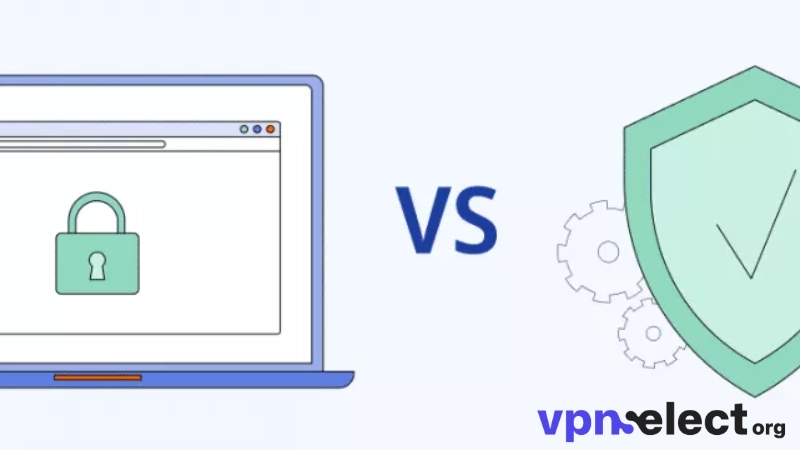
A VPN Chrome extension protects only your browser traffic through an HTTPS proxy, while a full VPN app encrypts all network traffic from every application on your device through a system-level tunnel – making the app significantly more comprehensive but the extension more lightweight and convenient for browser-focused tasks.
From my practical experience, I use both depending on the situation. When I am browsing on a trusted home network and just want to unblock a geo-restricted website, the Chrome extension is faster to toggle on and off without affecting my other applications. When I connect to public Wi-Fi at a cafe, I switch to the full VPN app because I need every application – not just Chrome – protected from network-level surveillance.
The sections below address three technical details that affect how well a Chrome extension can protect you compared to a full app.
What Is WebRTC Leak Protection and Why Does It Matter in Chrome?
WebRTC leak protection blocks Chrome’s built-in WebRTC protocol from revealing your real IP address to websites, even when you are connected to a VPN – a vulnerability that is unique to browsers and does not affect full VPN apps. For comparison, other browsers handle this differently – our best VPN for Firefox guide covers Firefox-specific leak behavior.
To explain how this leak works, WebRTC (Web Real-Time Communication) is a browser technology that enables video calls, voice chat, and peer-to-peer file sharing directly in the browser. To function, WebRTC needs to discover your device’s network interfaces, including your real IP address. This discovery happens at a level that bypasses the VPN proxy, meaning a website can run a simple JavaScript command to reveal your actual IP even while the VPN extension is active.
During my testing, I visited ipleak.net with 12 different VPN Chrome extensions active. Three of the free extensions leaked my real IP through WebRTC despite showing a different IP in the main connection. NordVPN, ExpressVPN, Surfshark, and Windscribe all blocked the WebRTC leak correctly. If your extension does not include WebRTC protection, you can disable WebRTC manually in Chrome flags (chrome://flags > search “WebRTC”) – but this may break video calling features on certain websites.
Does Chrome’s Manifest V3 Affect VPN Extension Performance?
Chrome’s Manifest V3 migration – which Google enforced for all Chrome extensions starting in 2024 – changed how VPN extensions handle network requests, but reputable providers have already adapted their extensions to maintain full functionality under the new framework.
Specifically, Manifest V3 replaced the webRequest API (which allowed extensions to intercept and modify network requests in real time) with the declarativeNetRequest API (which requires extensions to declare rules in advance). This change primarily affected ad blockers, but it also impacted how VPN extensions managed proxy routing and traffic filtering.
From my testing in 2026, all major VPN Chrome extensions (NordVPN, ExpressVPN, Surfshark, Windscribe, ProtonVPN) have completed the Manifest V3 migration without noticeable performance loss. The extensions still route traffic through their proxy servers, block WebRTC leaks, and filter ads/trackers effectively. However, some smaller or abandoned VPN extensions that were not updated may stop working as Google fully deprecates Manifest V2 support. Always verify that your chosen extension shows “Manifest V3” in its Chrome Web Store listing.
Is a VPN Chrome Extension Alone Enough to Stay Private?
A VPN Chrome extension alone is not enough for complete privacy because it only protects browser traffic, does not encrypt DNS queries on all systems, and cannot prevent tracking through cookies, browser fingerprinting, or account logins that identify you regardless of your IP address. For a deeper understanding of what privacy tools can and cannot do, our VPN Guide covers the full spectrum of VPN capabilities and limitations.
Specifically, a Chrome extension leaves three significant privacy gaps. First, all traffic outside Chrome – email clients, messaging apps, system updates, and background app connections – travels unprotected through your ISP. Second, if you log into Google, Facebook, or any other account while using the extension, those services identify you through your credentials, not your IP. Third, browser fingerprinting techniques can track your device across sessions even when your IP address changes.
For practical privacy, I recommend layering tools: use the best VPN for Chrome extension for everyday browsing convenience, activate the full VPN app when connecting to untrusted networks, browse in incognito mode to prevent cookie persistence, and avoid logging into personal accounts during sessions where anonymity matters. No single tool provides complete privacy, but combining them covers each other’s blind spots.
Frequently Asked Questions
How do I install a VPN extension on Chrome?
Open the Chrome Web Store, search for your chosen VPN provider (e.g., “NordVPN”), click “Add to Chrome,” and confirm the installation. The extension icon appears in your toolbar. Click it, sign in with your account, and tap Connect. The entire process takes under 60 seconds.
Can I use a VPN Chrome extension on a Chromebook?
Most VPN Chrome extensions work on Chromebooks since ChromeOS runs Chrome natively. However, because Chromebooks do not support traditional desktop VPN apps, the Chrome extension becomes your primary VPN tool – making WebRTC leak protection and strong proxy encryption even more important on this platform.
Do VPN Chrome extensions work in incognito mode?
By default, Chrome disables all extensions in incognito mode. To enable your VPN extension in incognito, go to chrome://extensions, find your VPN extension, click “Details,” and toggle on “Allow in Incognito.” I recommend doing this so your IP stays protected even when browsing privately.
Can my school or workplace block VPN Chrome extensions?
Managed Chrome environments (school or corporate Chromebooks) can restrict extension installations through Chrome Enterprise policies. If your administrator has blocked VPN extensions, the Chrome Web Store will not allow installation. In this case, a mobile VPN app on your personal phone is the alternative.






Leave a comment