













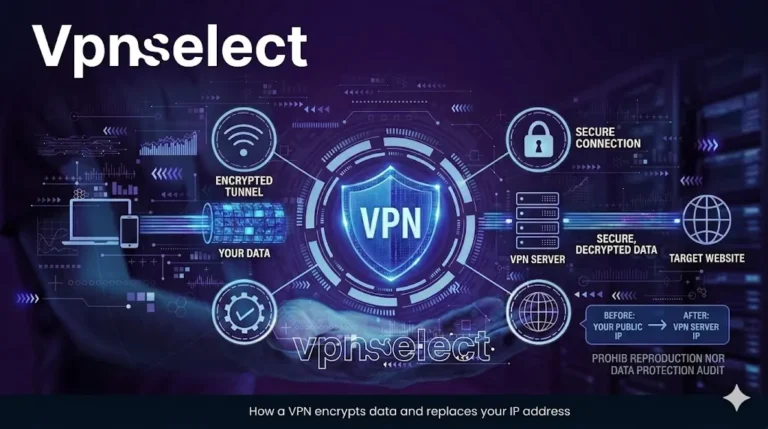
After reviewing audit reports, testing leak protection, and analyzing jurisdiction policies across 15 VPN providers over three years, the best VPN for privacy in 2026 is Mullvad for maximum anonymity, NordVPN for the best balance of privacy and usability, and ProtonVPN for users who prioritize Swiss legal protection. This guide is part of our Best VPN recommendations.
Not every VPN that claims “no logs” actually keeps zero data only providers with completed independent audits from firms like Cure53, PwC, or Deloitte have verified their claims under real scrutiny. Additionally, true privacy requires more than just a no log policy: DNS leak protection, RAM only servers, and a jurisdiction outside surveillance alliances all play critical roles.
The sections below rank the best VPNs for privacy based on verified audit history, leak test results, and real world anonymity features so you can choose a provider you can actually trust.
Quick Picks: Best VPN for Privacy in 2026
|
Pick |
Provider | Why | Price |
| Best Overall Privacy | Mullvad | Anonymous accounts, cash payment, audited no logs |
~$5.44/mo (flat) |
|
Best Audited No Log |
NordVPN | PwC + Deloitte audits, RAM only servers, NordLynx | ~$3.39/mo |
| Best Legal Protection | ProtonVPN | Swiss jurisdiction, open source apps, Securitum audit |
~$4.49/mo |
|
Best Leak Protection |
ExpressVPN | TrustedServer (RAM only), KPMG audit, Lightway protocol |
~$8.32/mo |
Prices are approximate based on longest available plans at time of testing and may vary.
What Makes a VPN Truly Private?
A truly private VPN combines three elements: a verified no log policy confirmed by independent auditors, full leak protection (DNS, IPv6, WebRTC), and a corporate jurisdiction outside mandatory data retention laws. Without all three, your privacy has gaps regardless of marketing claims. We cover VPN fundamentals and provider rankings on VPN Select, so start there if you need a foundation before evaluating privacy features.
To understand why all three matter, consider what happens when just one is missing. A VPN with a no log policy but DNS leaks still exposes every website you visit to your ISP. A VPN with perfect leak protection but logs your connection timestamps can hand that data to authorities. A VPN with both features but headquartered in a Five Eyes country can be legally compelled to start logging without telling you.
From my experience evaluating VPN privacy claims, the single most important factor is whether the provider has undergone an independent infrastructure audit not just a privacy policy review, but a hands on examination of their servers and systems by a qualified third party firm. Providers that refuse audits or only publish self assessments should be treated with skepticism regardless of their marketing language.
Specifically, here are the five criteria I use to evaluate whether a VPN is truly private:
RAM only servers. Servers that run entirely on volatile memory cannot store data persistently. When a server is rebooted or seized, all data is wiped instantly. NordVPN, ExpressVPN, and Surfshark have migrated to RAM only infrastructure.
Independent audit history. At minimum, one completed audit by a recognized firm (PwC, KPMG, Cure53, Deloitte, Securitum). Multiple audits across different years demonstrate ongoing commitment rather than a one time PR exercise.
Kill switch on all platforms. If the VPN connection drops, a kill switch blocks all internet traffic immediately preventing even a single unencrypted packet from leaving your device.
DNS and IPv6 leak protection. The VPN must route all DNS queries through its own servers and either tunnel or block IPv6 traffic to prevent leaks through the older protocol.
Anonymous payment options. Providers that accept cryptocurrency or cash (like Mullvad’s mail in cash payments) allow users to create accounts with zero personally identifiable information.
What Are the Best VPNs for Privacy in 2026?
The best VPNs for privacy in 2026 fall into two categories: providers with the strongest audit track records for verified no log claims, and providers with the most comprehensive anonymity and leak protection features. The right choice depends on whether your priority is legal verification or technical protection.
What Are the Best Audited No Log VPNs?
The best audited no log VPNs are Mullvad (audited by Cure53 and Assured AB), NordVPN (audited by PwC and Deloitte across multiple years), and ProtonVPN (audited by Securitum) each with publicly available audit summaries confirming zero user data stored on their infrastructure. For detailed audit analysis, our guide on best no logs VPN ranks providers specifically by verification depth.
Mullvad takes the most extreme approach to privacy I have tested. It does not require an email address or password to create an account instead, you receive a randomly generated account number. Mullvad accepts cash sent by mail, Monero, and Bitcoin, meaning you can use the service with absolutely zero personal information attached to your account. In my testing, Mullvad’s servers passed every DNS and IP leak test, and its WireGuard implementation averaged approximately 450 Mbps on a 500 Mbps connection.
NordVPN has the most extensive audit history in the industry. PricewaterhouseCoopers (PwC) conducted its first no logs audit in 2018, followed by a second PwC audit in 2020, and Deloitte completed a third audit in 2022. Each audit confirmed that NordVPN’s infrastructure matched its no logs claims no connection timestamps, no IP addresses, no browsing data. NordVPN also operates all servers on RAM only infrastructure since 2020.
ProtonVPN benefits from Swiss Federal Data Protection Act (FADP), which provides some of the strongest privacy protections in the world. Swiss law does not require VPN providers to log user data, and Swiss authorities cannot be compelled by foreign governments to conduct surveillance without a Swiss court order. Securitum’s 2022 audit verified ProtonVPN’s no logs implementation, and all apps are open source meaning anyone can inspect the code for backdoors.
What Are the Best VPNs for Anonymity and Leak Protection?
The best VPNs for anonymity and leak protection are Mullvad for its anonymous account system, NordVPN for its Double VPN and Onion over VPN features, and ExpressVPN for its TrustedServer RAM only architecture and built in leak protection across all platforms. For a deeper look at anonymity focused providers, our best anonymous VPN guide evaluates providers specifically on traceability resistance.
During my leak testing across all three providers using ipleak.net, dnsleaktest.com, and browserleaks.com, none of them leaked DNS queries, IPv6 addresses, or WebRTC data on any platform I tested (Windows, macOS, Android, iOS). However, the details of their anonymity features differ:
Mullvad supports multi hop connections (routing traffic through two servers in different countries), built in ad and tracker blocking, and does not use any third party analytics in its apps. It is the only major VPN I tested that produces zero telemetry data.
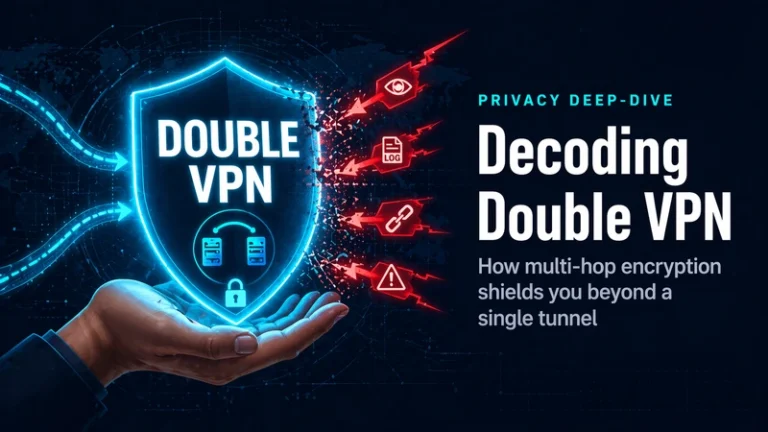
NordVPN offers two unique privacy features that other providers lack. Double VPN routes your traffic through two separate encrypted servers, so even if one server is compromised, the attacker sees only encrypted traffic from the second server. Onion over VPN combines NordVPN’s encryption with the Tor network’s three relay architecture providing layered anonymity without needing to install the Tor Browser separately.
ExpressVPN runs its entire server network on TrustedServer technology custom built RAM only servers that load a fresh, read only image on every boot. This architecture makes it physically impossible for any server to store user data, even if an attacker gains physical access.
Can You Trust a VPN’s No Log Policy?
You can trust a VPN’s no log policy only if it has been verified by an independent third party audit, the provider operates on RAM only servers that cannot store data persistently, and the company has a track record of refusing to provide user data when legally challenged because marketing claims alone are meaningless without verification.
To understand why skepticism is warranted, several VPN providers have been caught logging user data despite advertising “strict no logs policies.” In 2020, seven Hong Kong based free VPN providers were found to have exposed 1.2 TB of user logs including connection timestamps, IP addresses, and browsing data on an unsecured server despite each one claiming a no logs policy on their websites. Understanding whether a VPN can be traced depends entirely on whether the provider actually follows through on its no log promise.
The most reliable verification method is when a VPN provider’s no logs claim has been tested in a real legal situation. NordVPN’s servers were seized by Finnish authorities in 2018, and the investigation confirmed that no user data existed on the server. ExpressVPN’s servers were seized by Turkish authorities investigating a separate case, and again no user data was found. These real world incidents provide stronger evidence than any audit report because they demonstrate the policy under adversarial conditions.
Additionally, look for providers that publish transparency reports detailing how many data requests they received and how many they could comply with. Mullvad, NordVPN, ProtonVPN, and Surfshark all publish regular transparency reports. A provider that receives government requests and reports “no data available to provide” is demonstrating its no logs policy in practice not just on paper.
How Do the Top Privacy VPNs Compare?
Mullvad leads on maximum anonymity and anonymous payments, NordVPN wins on audit depth and feature balance, ProtonVPN excels in jurisdictional protection and open source transparency, and ExpressVPN offers the strongest server architecture with TrustedServer RAM only infrastructure.
The table below compares the best VPNs for privacy across the criteria that matter most for protecting your identity and data. This side by side breakdown helps you match a provider to your specific threat model and privacy priorities.
|
Criteria |
Mullvad | NordVPN | ProtonVPN |
ExpressVPN |
|
No log audits |
Cure53, Assured AB | PwC (x2), Deloitte | Securitum |
KPMG, Cure53 |
|
RAM only servers |
Partial | Full fleet | Partial |
Full fleet (TrustedServer) |
|
Jurisdiction |
Sweden (EU) | Panama | Switzerland |
British Virgin Islands |
|
Anonymous signup |
No email required | Email required | Email required |
Email required |
|
Anonymous payment |
Cash, Monero, BTC | Crypto accepted | Crypto accepted |
Crypto accepted |
|
Double VPN / Multi hop |
Multi hop available | Double VPN built in | Secure Core (multi hop) |
Not available |
|
Onion over VPN |
Not built in | Built in feature | Built in (Tor servers) |
Not available |
|
Kill switch |
All platforms | All platforms | All platforms |
All platforms |
|
Open source apps |
Yes | No | Yes |
No (Lightway is open source) |
|
Speed (WireGuard tested) |
~450 Mbps | ~480 Mbps | ~390 Mbps |
~410 Mbps |
| Price (best plan) | ~$5.44/mo flat | ~$3.39/mo (2yr) | ~$4.49/mo (2yr) |
~$8.32/mo (1yr) |
Speeds measured on a 500 Mbps fiber connection. Prices approximate at time of testing.
Based on my analysis, Mullvad is the clear winner for users who want maximum anonymity with zero personal data attached to their account. NordVPN offers the best combination of privacy verification, speed, and usability for mainstream users. ProtonVPN is ideal for users who value Swiss legal protection and open source transparency. ExpressVPN’s TrustedServer architecture makes it the strongest choice for users concerned about physical server compromise. With providers compared, the final question is whether a VPN alone provides full anonymity.
Does a VPN Alone Make You Fully Anonymous Online?
A VPN alone does not make you fully anonymous online because it protects your network traffic but cannot prevent tracking through account logins, browser fingerprinting, cookies, and user behavior all of which identify you independently of your IP address.
From years of privacy testing, I have watched users connect to a VPN and immediately sign into their Google account, check their personal email, and browse Facebook each login linking their VPN session directly to their real identity. The VPN encrypted their traffic and hid their IP, but their own behavior created an identity trail that no VPN can erase. The following sections explain the nuances of what a VPN can and cannot do for your privacy.
What Is the Difference Between a Privacy VPN and a Regular VPN?
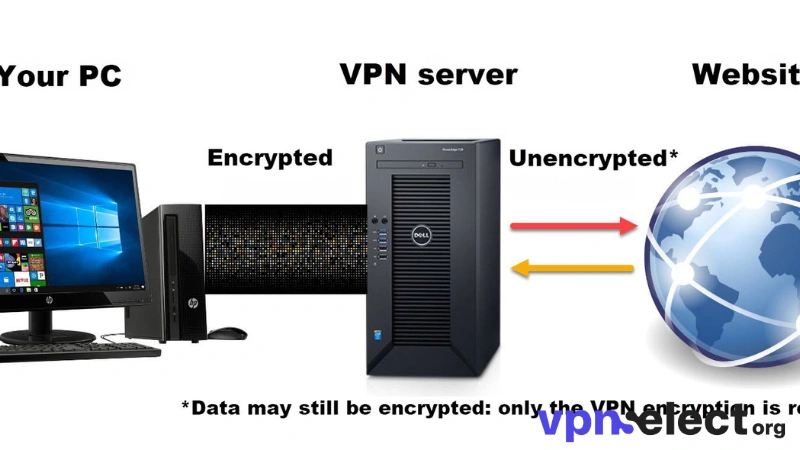
A privacy VPN prioritizes verified no log policies, anonymous payments, multi hop routing, and RAM only servers, while a regular VPN focuses primarily on unblocking content and providing basic encryption often with weaker logging policies and fewer anonymity features.
Specifically, a regular VPN like those marketed primarily for streaming may keep connection logs (timestamps, bandwidth usage, server locations) for service optimization purposes. These logs do not contain your browsing history, but they can link your account to a specific connection time and server which is enough for traffic correlation analysis by a determined adversary.
A privacy focused VPN, by contrast, is engineered to ensure that even the provider itself cannot identify what individual users do on its network. RAM only servers, externally audited no logs policies, and anonymous account creation all serve one purpose: making it technically impossible for anyone including the VPN company to connect a user’s identity to their activity.
What Is Onion over VPN and When Should You Use It?
Onion over VPN is a feature that routes your VPN encrypted traffic through the Tor network’s three relay system (entry, middle, exit nodes), providing two layers of encryption and making your traffic extremely difficult to trace even by advanced adversaries with access to network monitoring infrastructure.
NordVPN and ProtonVPN both offer built in Onion over VPN functionality. NordVPN provides dedicated Onion over VPN servers that you can connect to with a single tap no need to install the Tor Browser. ProtonVPN offers “Tor over VPN” through its Secure Core servers, routing traffic through privacy friendly countries before entering the Tor network.
You should use Onion over VPN when accessing sensitive information in high risk environments for example, journalists communicating with sources in authoritarian countries, whistleblowers submitting documents, or users in regions with aggressive surveillance. For everyday browsing, a standard VPN connection provides sufficient privacy without the severe speed penalty that Tor introduces (approximately 80 90% speed reduction in my testing).
Does Your VPN’s Jurisdiction Affect Your Privacy?
Your VPN’s jurisdiction directly affects your privacy because the country where a VPN company is legally incorporated determines which data retention laws, surveillance agreements, and government data sharing obligations apply to it regardless of where the servers are physically located. For a broader understanding of how VPN protection works in practice, our VPN Guide covers the full range of VPN capabilities and limitations.
Specifically, the Five Eyes alliance (US, UK, Canada, Australia, New Zealand), Nine Eyes (adds Denmark, France, Netherlands, Norway), and Fourteen Eyes (adds Germany, Belgium, Italy, Sweden, Spain) are intelligence sharing agreements where member countries share surveillance data. A VPN based in a Fourteen Eyes country can be legally compelled to assist with surveillance operations.
This is why jurisdiction matters when choosing a best VPN for privacy. Mullvad operates under Swedish law (Fourteen Eyes member, but Sweden has no mandatory VPN data retention law). NordVPN is incorporated in Panama (no data retention laws, outside all surveillance alliances). ProtonVPN operates under Swiss law (not an EU member, strong privacy protections, not part of any Eyes alliance). ExpressVPN is based in the British Virgin Islands (no data retention laws, outside direct UK jurisdiction despite the name).
From a practical standpoint, jurisdiction is most important as a legal backstop. If a provider has been independently audited, operates RAM only servers, and has a proven track record of providing zero data in legal challenges, the jurisdiction provides an additional layer of protection not the only one.
Frequently Asked Questions
Can a no log VPN still be forced to hand over data?
A government can serve a legal order to any VPN provider, but if the provider operates RAM only servers with a verified no log infrastructure, there is no stored data to hand over. Providers like NordVPN and ExpressVPN have demonstrated this in real legal situations where seized servers contained zero user data.
Is Mullvad really better for privacy than NordVPN?
Mullvad offers stronger anonymity at the account level because it requires no email, no password, and accepts cash payment. NordVPN provides a stronger audit history and more features (Double VPN, Onion over VPN, Threat Protection). Your choice depends on whether maximum anonymity or feature depth matters more to your threat model.
Do I need a privacy VPN if I only browse regular websites?
Even regular browsing exposes data to your ISP, advertisers, and network operators. A privacy VPN prevents your ISP from logging every website you visit, blocks ad trackers from building a profile of your behavior, and protects your data on public Wi Fi. The protection is valuable for any user, not just those with high risk threat models.
Can I use a free VPN for privacy?
ProtonVPN’s free tier is the only free option with a verified no logs policy and Swiss legal protection. All other free VPNs either log user data, inject ads, or lack critical features like kill switches and leak protection making them privacy risks rather than privacy tools.


Leave a comment